The follicle count.
The second appointment was my baseline testing — 9:00 to 10:00 a.m., at 159 East 53rd Street. Bloodwork. AMH levels. A transvaginal ultrasound. Again, I didn't really know what to expect.
I arrived at the clinic and checked in. The building was beautiful. Clean. Modern. The kind of place designed to make people feel hopeful. Instead, I felt very alone. There were pregnant women everywhere. Women with their husbands. Women with their partners. People building families. People already in the middle of the thing I was trying to plan for someday. I was there by myself.
After checking in, I met with someone from the financial office. They printed out pages of numbers and costs and paperwork and asked me to sign. The numbers felt enormous. Abstract. The kind of numbers you glance at once and then glance at again because surely you misread them the first time.
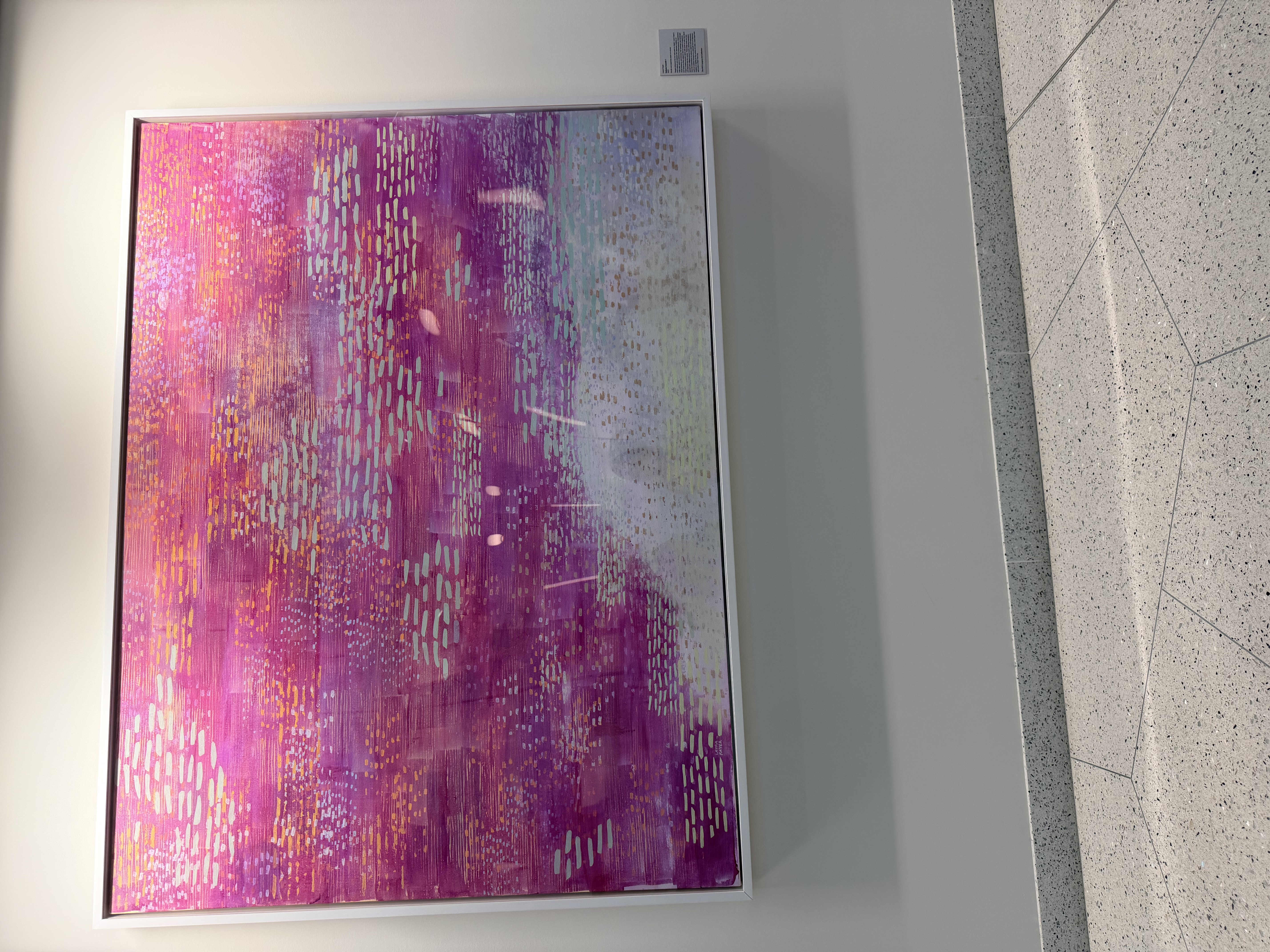
Then I sat down to wait. I remember sitting in front of a pink wall. Maybe it wasn't specifically for egg-freezing patients, but it felt that way. Across the room were husbands sitting on laptops waiting for their wives. Everyone seemed to have a role. A place. A person. I was just there alone.
Eventually they called my name and brought me back to an exam room. I changed into a gown. Got onto the table. Waited. Then the doctor came in and performed the transvaginal ultrasound. She looked at my ovaries on the screen and counted the follicles. Three on one side. Seven or eight on the other.
That was the moment the process stopped feeling theoretical. I didn't know enough yet to fully understand what those numbers meant, but I knew enough to know they weren't the numbers I had hoped to hear.
My heart sank. I started asking questions. What percentage of people actually use their frozen eggs later? About thirty percent, she said. Okay. And at my age, what percentage are actually viable? Around sixty percent.
I think that was the moment my stomach dropped. Because suddenly the math became real. Not emotional. Not hopeful. Statistical. The numbers started multiplying themselves in my head. Three. Seven or eight. Thirty percent. Sixty percent. And my brain immediately started jumping ahead. People do this multiple times? What if I do this and it still doesn't work? What if I spend all this money and put my body through all of this and still end up with nothing? What if later I want something I can't have anymore? No one was saying those things. But that's where my mind went.
A note, looking back
Those percentages came from one conversation, specific to my age and my results that day. They're not a general statistic to plan around — if numbers like these come up for you, ask your own clinic what they mean given your own testing.
For the first time, this wasn't a future version of me. It was my body. My fertility. My timeline. My reality. The bloodwork had been drawn that day too, but those results wouldn't come back for another week or so. So I left with questions and no answers.
I think that was the day I wrote my first piece specifically about egg freezing. The day I ordered The Big Freeze. The day I started trying to understand a world that suddenly felt very personal.
Afterward, I walked through Manhattan for almost three miles. The city kept moving normally while my brain was trying to calculate an entire future all at once. I remember thinking: I cannot think about this right now. I need to shut this off for a minute. At least until I get home and can fall apart privately.
Instead, I walked to The York. Ordered a beer. A shot. A burger and fries. Something familiar. Something immediate. Something that didn't require me to think ten years ahead.
This is one person's experience, not medical advice. Contact your clinic about severe, persistent, or concerning symptoms.